Showing posts with label Events. Show all posts

Friday, November 28, 2014

The Power of the Four P's

The Power of the Four P's

Carol Klein's Wine Tasting, Saturday, November 15th

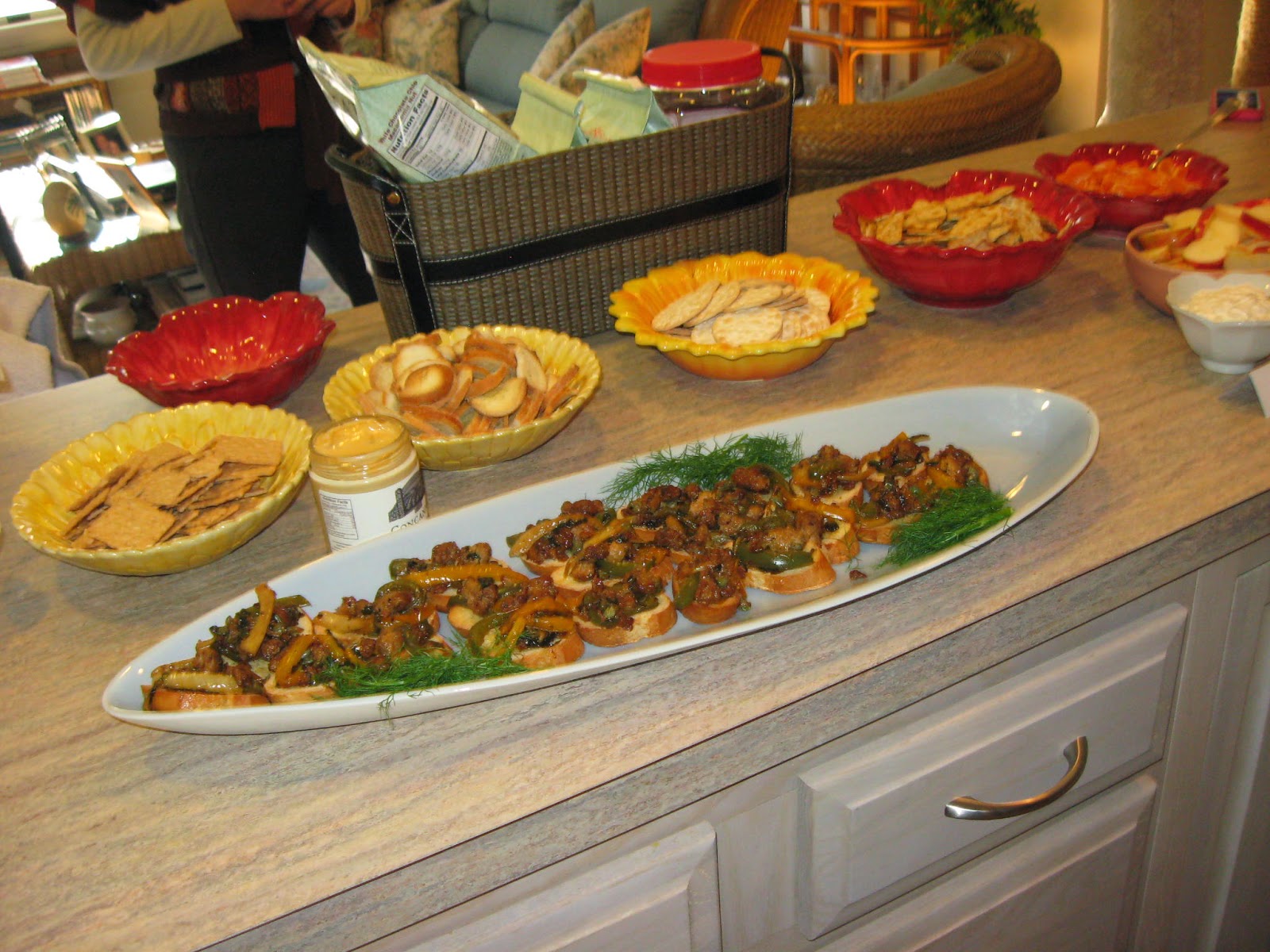
All women, all about food and wine, fun, and camaraderie. Best described with Four P's: passionate, poised, particular, and all around pleasant. The Four P's also happens to be the local's nickname for Ireland's Four Provinces Pub & Restaurant in Falls Church, the main watering hole for all the gals where gossip flies over booze bonding, frivolous fare, and all around fun times! Carol Klein invited me over to host a wine tasting and food pairing seminar, as her girl friends are passionate about wine and even more particular about their food! After providing me with a list of wines, I gave them a list of suggestions to pair with the wines. A number of the women pitched in and made delicious hors d'oeuvres. Below are some of the perfect pairs we discovered on that frigid, fall day.

Perfect Pairs to Share:


  • Endive with fresh chèvre, mandarin orange, and almond slices


Paired with E. Guigal Côtes du Rhône Blanc 2012. A blend of Viognier and Marsanne that truly shows off the Viognier. Aromas of peach, apricot, white flowers and a bit of spice. But truly, the magic here was the orange zest burst followed by smooth viscosity all melding with the Endive crunch and citrus punch from the oranges. Explosion of pit fruits and mouth watering freshness.

  • Salmon creme fraîche on cucumber with sprinkled dill


Paired with Trader Joe's Blanc de Blanc Brut and Ameztoi Getariako Txalolina 2011
The easy pair was the bubbles and the key ingredient: cucumber, which is light, refreshing and aromatic. The effervescence of the sparkling makes for a clean pairing, simply a wash that lightens the oiliness of the salmon, compliments the creaminess of the creme fraîche and swirls the cucumber aromatics around your mouth and dissolves the herb garnish.

The Ameztoi Getariako Txalolina was the unique pairing. I've never had this wine and I still cannot pronounce it! At first, I thought it was Greek, but it's from the Basque country in Northern Spain bordering the Mediterranean. You can taste the sea, plus it's a prickly wine that gives tactile sensations. I wouldn't drink it every day, but I can see it as a perfect spritzer sipper in the dog days of summer, and paired with cucumbers it's a match made in heaven for a palate cleanser, so no need for sorbet.


  • Tandoori Chicken with Cilantro Sauce and Sweet Chutney Sauce

Paired with Errazuriz Carmenere, Aconcagua Valley, Chile 2011. God this was good. Straight up awesome pairing. Carmenere always presents a challenge because of its variety of spices. Some people describe Carmenere's aromas to be an amalgamation of Indian spices like cardamom, turmeric, cumin. Others describe Carmenere's smell as fresh churned earth (not so appealing in my opinion), but definitely cool to gardeners who love digging in the dirt. Depending on the ripeness level and the talent of the winemaker and viticulturist, Carmenere can sing. Errazuriz is top of the line, and for $15-$17 on the shelf, it's a steal. So I suggested we use this for a festive, fall lineup during our afternoon soirée. Due to the Indian spices I've always picked up in Carmenere, I asked the hostess to bring an authentic Indian dish. She brought Tandoori chicken with the dipping sauces. The fruit in the Carmenere nicely complimented the spicy and sweet sauces, which in turn toned down the spiciness of the Carmenere.


  • Trader Joe's dark chocolate cocoa dusted truffles

Chocolate Box Sparkling Shiraz Australia NV
The Sparkling Shiraz proved to be pure decadence. The deep, rich folds of Shiraz juice, layered in
chocolate nuances, raspberry jam, and peppery spice, enveloped the bittersweet tones of the cocoa while the bubbles whipped up the entire magical concoction into swirls of chocolate ecstasy. Plenty of moaning was going on at this point, and only continued to part two:


  • Dark Caramel Chocolate with Sea Salt 

Castello di Amorosa La Fantasia Rosé Napa Valley 2009
Step into pure fantasy for sure with this wine. On the lighter side, but beautiful ruby red in color, slightly effervescent, syrupy sweet but not cloying with just a hint of salt crunch to add texture and accents to the chocolate flavor. Mmmm. Mmmm. Good.

 Thanks ladies, my Four P's crew, for such a wonderful afternoon!


Wednesday, November 5, 2014

NIAF 2014 Amarone Seminar

National Italian American Foundation 

Amarone Seminar and Gala 2014


NIAF meets annually and is an organization made up of quite astounding Italian Americans who have made tremendous successes of their lives. I was honored to sit as a panelist during their annual wine tasting, representing one of the most renowned Amarone families, Tommasi. The tasting itself was led by Philadelphia's food and wine writer, Brian Freedman. The dynamic panel consisted of wholesalers who rep honorable Amarone families. As we guided guests through a sampling of the Valpolicella region, we discussed the etymology of grape names, the history of winemaking, current statistics of Veneto production levels, and the differences between the 2009 and 2010 vintages of Amarone. The session ended with a tasting of prominent Amarones, such as Allegrini, Tommasi, Tedeschi, and Brigaldara.

Most memorable moment of the event: seeing Joe Piscopo live, listening to John Turturro speak of his family and life accomplishments, or drinking exceptional Amarone...I think I'll go for the latter. But the entire evening was a smashing success!


Wednesday, January 23, 2013

Wine Dinner Bust


Wine Dinner Bust

Oh where, oh where have all the wine dinners gone? Long time passing, but the economy has shifted the trends on how we explore and sample wine these days. For those of you who love to seek out a great wine dinner at a fabulous restaurant, or just your neighborhood joint, you might notice a trend of slim pickings. Blame it on the economy. The pressure is on for Obama in 2013 to put the rubber on the road. But regardless of positive possibilities, most restaurants may be reluctant to forge ahead with costly, time-consuming endeavors, such as the proverbial wine dinner. And don't get me wrong, I love wine dinners and seek them out. Just went to Taberna del Alabardero for a fabulous wine dinner hosted by @ArrowinesInc, hence the pics to decorate this column. But the wine dinner breed is becoming scarce.

So, what alternatives are left to food and wine hounds looking for a bargain and the services offered at exclusive wine dinners? Educational wine classes (usually accompanied with food).

Even though a wine dinner is the perfect venue for a restaurant to strut its stuff with cool food art, inspired wine and food pairings, and perhaps a chance to meet  the celebrity wine maker, trendy “small-batch” wine tastings are sprouting up in its place. More casual settings with less emphasis on $$$ allow retail shops and restaurants more elbow room to showcase 4-8 wines in a more fast-paced setting. When you nix elaborate food courses upwards of five or more, fine cutlery, white table cloths, massive amounts of glassware, and heavy wait staff, you can become more creative with the idea “less is more.”

What to look for around Arlington/Falls Church:

Red, White and Bleu in Falls Church launches SAVE-HOUR Monday, February 4th. This play on words for savor is all about informed wine tastings led by an official sommelier and captivating themes that vary each month.  The tastings only cost $10, and the best part is the $10 is applied to your wine purchase that evening. Featured foods sold in the shop add highlights to the tastings while also adding the food pairing factor.

Arlington Cinema Draft House may not be reinventing the wheel for 2013, but you can’t beat this deal of $1 wine tastings presented by the Washington Wine Academy while you enjoy a movie and some chilled out pub food. Some people buy up to 10 tickets and still walk out remembering the flick.

Arrowines in Arlington offers top-notch classes and wine tastings that are always sponsored by experts. Here’s your chance to meet the winemaker, the dude (or gal) that actually sourced the wine, or the nerdy wine salesman that can lay on the facts till you snore.  Trick is you need to sign up for their newsletter and inquire of their private tastings, which are all FREE!

Northside Social is the place for eclectic food, chef-taught classes, pig roasts, open mic nights with wine tastings, and a whole lot of funkified flavorful events. Usually $35 or less, this is a steal for those wine dinner seekers out there. A broad, diversified wine list makes this such a cozy hide out, and you can feast your eyes on locally sourced art.

Twisted Vines on Columbia Pike is still a well kept secret. Finally, someone thought to throw in an open area kids’ playground while Moms and Dads can partake of Happy Hour. Once a month, stroller mania takes over at Twisted Vines and parents can take a break from 10am-3pm for FREE while enjoying happy hour wine specials. And better yet, this joint offers private wine classes with a Certified Wine Educator and unique themes. Prices vary based on wine themes, but usually run less than $35. Call to inquire.

Screwtop Wine Bar and sister wine shop, Grateful Red, also add to the Clarendon wine scene with chocolate & wine pairings this Valentine’s and more educational wine classes usually under $50 a pop. Wendy Buckler has a knack for whipping up wine grandeur in tiny spaces with stunning cheese selections.
Hope this trot around town helps diversify your wine tasting palettes. 

For even more specialty listings, you should also check out David and Nycci Nellis’ TheListAreYouOnIt.com @nyccinellis for event details or Capital Cooking with LaurenDeSantis  @capitalcooking. They always have the scoop on the latest food and wine gossip of the DC metro area.

Wednesday, January 4, 2012

Renewed Resolutions: a season in wine


 The New Year brings new ambitions, or rather renewed longings for resolutions forgotten. Either way, with holiday festivities quickly fading and Old Man Winter slumping on your stoop, I picture you clutching your wallet, foregoing those desserts, dining at home, and passing on the wine.  I must confess the first two weeks of January call for frugal routines, lean-mean exercise machines, and ultra-value sales at every retail venue imaginable. But when those initial two weeks leisurely pass and the temptations rise stealthily to the forefront of your mind, don’t deny yourself the pleasures of a healthy, satisfying diet and a reasonable entertainment budget. As the old adage goes, everything in moderation from fiscal fun, wines to splurge on, and bountiful dining habits homespun.
The trick to managing a healthy diet is consuming delicious wines (in moderation, of course) with heart-healthy, mouth-watering foods that don’t put a dent in your wallets. For instance, last night we went to deplete the pantry and fridge eliminating a trip from the store; after some thought, I whipped up some cauliflower mac-n-cheese with baked panko-breaded chicken breasts (recipes all sourced from the click of Google search). I uncorked a hearty little gem, Bogle Old Vine Zinfandel, that only set me back $10 (on-sale at Trader Joe’s!). Just the other night, we roasted a pork loin rubbed in whole-grain Dijon mustard, with some lemon juice sprits to liven it up (a recipe I plucked from Food and Wine magazine http://www.foodandwine.com/articles/alexandra-guarnaschellis-healthy-wine-pairings), and we paired it with Catena Malbec—another whopping delicious wine for $10 at your local grocer and around-the-corner wine shop! Just waiting for me in my basement is a $7 Chardonnay from Rex-Goliath that I can pair with asparagus and fettuccine tossed in a black-pepper chardonnay sauce.
You see, the beauty of eating healthy and taking that last bite right at the moment of being full (and not after two or three servings), is that you get to quaff down a wine that makes the meal ever-so-more fulfilling. Quenching the hunger cravings for sweets, heavy starch, and rich dishes proves challenging in this curl-up-beside-the-fire weather warming your toes. But resist the urge to fall victim to a case of the gimme gimmes. Mind control empowers everyone, and taking less from the wallet can only brighten your mood. Regularity and moderation in every habit you develop is the key to a heart-healthy lifestyle.  Eating fresh, eating less, more wholesome foods is a trend overtaking America. Drinking wine in moderation is now proven to increase longevity, reduce heart-attack risk, lower the risk of heart disease, and more. The point is, the time is right, the time is now—in a skeptical stock market with an election year ahead—to be fiscally responsible and eat right. Great wines for under $12 are out there! Seeking them out enhances the fun.
Due to the call for heart-healthy wines and the never-ending search for healthy food and wine pairings, I am launching a new tasting/eating series at Red, White & Bleu Gourmet Wine Shop in Falls Church this month, dubbed A Year in Wine. Every last Monday of the month, you can join a group of neighbors (all wine-lovers at heart) and learn how to eat and drink seasonally for a nominal fee of $25. We will present mouth-watering recipes that are friendly on your waist-line, easy to prepare in your home, and sourced from local, in-season ingredients. The wines to pair will be pocket or purse friendly (whatever your gender), and most importantly, boasting body and flavor profile appropriate to the weather and current month! This is a new form of book club, inspired by Dr. Vino’s A Year in Wine. Come learn how to make your homespun experience all the more heart healthy and fun!

Sunday, September 25, 2011

La Vida Dolce in the Fall


Crinkly, dry fall leaves crunching underfoot always put me in the mood for fall. The seasons hover on the verge of change, but the lazy days of summer have been ushered out with the earlier setting sun and the onset of school schedules, grueling rush hour traffic, and daily work lives. The offices are now packed, everyone has had their vacations. Congress hammers away on Obama’s Job Plan—the economy and deficit ceilings fill the docket with the dismal stock market setting the tone for a volatile season ahead. As the leaves cling to their last shades of green, the temperature drops and the air electrifies with hustle and bustle before the year-end holidays impact the frantic, fall pace. This is the perfect time to turn your mind to more serious wines, wines with more soul, both red and white, before the Northern Hemisphere descends upon its great slumber.
With the change of nature’s clock, dusk comes earlier and the dinner hour demands more cozy cuisine. The fruits of summer wane, while the Brussels sprouts bloom into abundance with a final surge of asparagus, green beans, squash and root vegetables. Kitchens turn out cuisine dominated by earthy undertones and gamy meats. Time to turn to full-bodied whites with luscious weights underscored by bosc pears, sour apples, blasts of acidity, and bitter-almond finishes.  Rieslings, Rhone whites and Oregon Pinot Noirs exhibit the autumnal flavors. But, nothing cries out fall season to me more than Italian wines and Italian cuisine. Mushroom ragout compiled of exotic shrooms plucked fresh from the farmer’s market screams for mascarpone polenta gnosh; or a nice fish stew with butternut squash entices the palate for some aromatic Italian whites collected from the coastal towns of the Marche, or mountain-entrenched Soaves and Gavis from the Veneto and Piedmont regions, respectively.
My love for everything Italian—my partiality to fall and brilliant fire reds painted with burnt orange colors—inspires me for a new educational series at Red, White and Bleu Wine Shop during the months of September, October, and November. Venture out on a gastronomic Tour of Italy—pictorially, mentally, and sensory.  Once a month, learn how to eat, drink, and live the Italian lifestyle inspired by Joseph Bastianich and David Lynch’s guide: Vino Italiano: The Regional Wines of Italy.  We explore a different geographic region each month and dive into one specific food and wine culture. Last month, we explored Lombardy and the fashion mecca of Milan. Participants indulged in Nebbiolos, Barberas, Chardonnay, and Sparkling wines indigenous to the area, while they stuffed their bellies with regional cheeses, charcuterie, and main fare from the streets of Milan.
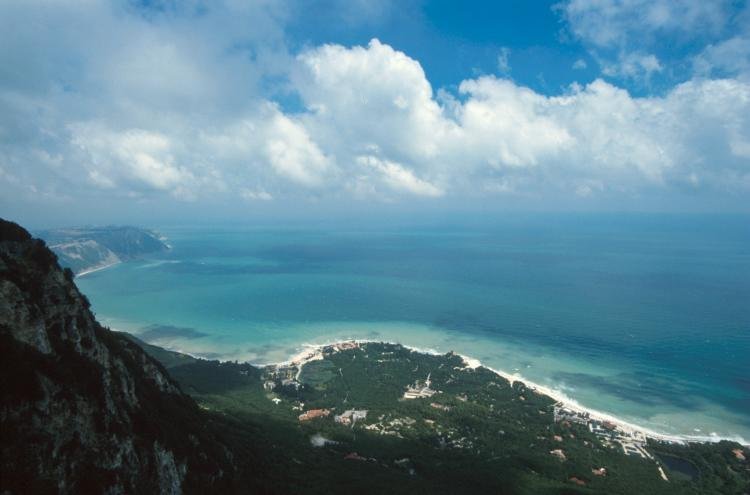
October brings even more delectable intrigues from a quiet, seaside village in the Marche province, tucked behind cliffs of the Monte Cònero massif. Scores of crudo (raw seafood) and porchetta (stuffed suckling pig) work their way to the Marche dinner table. We intend to sample cave-aged, sheep’s milk Pecorinos and savory prosciuttos sourced from the mountain village of Carpegna. The wines will abound from the towns of Jesi, Matelica, Pesaro, and Urbino, like Rosso Piceno and Rosso Cònero crafted from the Montepulciano and Sangiovese grapes.

Come delve into Italian goodness at Red, White and Bleu Sunday, October 16th at 4:00pm, check out details online at the new website www.redwhiteandbleu.com. Live la vida dolce!

Saturday, August 13, 2011

The Milk Maid


Tommorow is the summer finale of Cheese Boot Camp at Red, White & Bleu Wine Shop--until January 2012. We will taste how the milk source affects the flavor of the cheese. Not to be sexest by using the milk maid comparison, I couldn't help but to think of Michelle Bachmann's hats-off to submissive wives. Despite the milk maid imagery, two factors play an important role in the final flavor of a cheese: the breed of animal and the land on which it munches. We will ignore cheeses crafted from the milk of "exotic" animals, such as reindeer, yak, and camels. The animals we will focus on are cows, sheep, goats, and water buffalo.

We won't be using any processed cheese. We learned in the Cheddar Whiz class that mass-market "cheese food" is a process of cooking curd and mixing it with various preservatives, fats, flavorings, colorings, and water. In turn, "processed" cheese is reconstituted in blocks, slices, or wedges and then shrink-wrapped in plastic, only to be flooded in refrigerator cases at your local grocery. Rather than using prepackaged cheese, we will be tasting real cheese--good cheese--made from milk, starter cultures, rennet, and occasionally a natural coloring or a mold culture.

The key to this course will be the flights of cheese and how they are ordered.  Three flights will be organized with a sampling of three different milk styles within each flight: goat, sheep, and milk. Each cheese flight will vary by cheese style. So the first flight will consist of only soft or soft-ripened cheeses--one made from goat's milk, one from cow's, and one from sheep's milk. Got it? This is a great way to taste the variation of flavor derived from milk type. A cylindrical mound of goat fluff brought on by Cherry Glen, tasted against a soft, creamy sheep's milk by Boschetto and a delicate, soft-ripened Fromage d'Affinois cow's milk cheese is an eye-opening experience. Here's why.

Cow's milk is not as concentrated as sheep or goat. Cows produce more milk than sheep or goats, but not proportionally more milk. Only 13% of cow's milk is solid, the rest is water. Cow's milk does contain vitamin A in the form of beta-carotene, which is an orange or yellowish substance--think carrots. Thus, cow's milk is off-white or ivory-colored and darker in the summer months when the cows are digesting more beta-carotene from the pasture fodder.

Sheep's milk is more hearty and concentrated, comparable to the animal itself, which can survive in sparser conditions than cows. Ewe's milk contains up to 20% solids with more fat and protein than cow's milk. Since cheesemaking is a process of concentrating milk (through dehydration)--ewe's milk is one step closer to the end goal: cheese. Sheep's milk is pure white.

Even hardier than sheep, goat's are known to be the ultimate diners. What won't a goat eat? Despite this belief, the goats that produce many of the world's most famous cheeses graze in lush green pastures and sport a mellow temperament. Goats produce the most milk proportionate to their body weight. They birth their babies in mid-late winter lactate for at least 10 months, but don't make it out to pasture until spring or summer. Goat's milk has slightly less the same fat and protein content as sheep's milk.

These rules are very generic and many factors play into the ultimate flavor and fat content of the milk, like lactation cycles and time of day of milk collection, and seasonal animal diets. Overall, it's often said that goat's milk is best for drinking, cow's milk makes the best butter, and sheep's milk the best cheese. In the end, Pierre Androuet sums it up in the Guide du Fromage, "Every region has its own special magic which chemistry and technology have thus far been unable to duplicate. The character, subtlety and perfection of a cheese attest to centuries of refinement in individual cheese-making methods within limited geographical areas sometimes no larger than a few fields. Vegetations, climate, rainfall, subsoil, and breed all contribute to the production of a cheese which is unique and inimitable."

It will be interesting after tomorrow if I can say cow's milk cheese is sweeter, or sheep's is richer, etc. I will type those conclusions soon.

Flight One (Soft Cheeses):
Cherry Glen Monocacy Ash Maryland Goat's milk
Boschetto Al Tartufo Spain Sheep's milk
Fromage d'Affinois France Cow's milk
Wine Pairings: New Zealand Sauvignon Blanc, Tuscan Sangiovese, Ribera del Duero Tempranillo

Flight Two (Hard Cheeses):
Cabra Buenalba Spain Goat's milk
Grand Old Man Pecorino Spain Sheep's milk
Meadow Creek Virginia Cow's milk
Wine Pairings: California Barbera, Austrian Pinot Noir, Alsatian Pinot Blanc

Flight Three (Blue Cheeses):
Valdeon Spain Goat's milk
Roquefort France Sheep's milk
Cashel Ireland Cow's milk
Wine Pairings: Beaujolais Cru, Sauternes

Tuesday, July 19, 2011

Cheddaring It Out


Yesterday's third session of Cheese Boot Camp: Summer 2011 was an awesome affair. We cheddared it out with eight different cheddar cheeses paired with two beers and six wines. Farmstead cheddaring took center stage--an art that was resurrected in the 60's by the hippies. Disillusioned by national politics and the controversial Vietnam War, humble people seeking land and rural farm life left their occupations to craft cheese. After the Industrial Revolution and both World Wars, cheddar had lost its identity and had become the homogenized American orange, creamy, pasteurized cheese block found in every supermarket.

Cheddar originated in Somerset, England in the caves of Cheddar Gorge, but the process crossed the Atlantic Ocean and settled in the Mid West and went on to Australia and South America. The name Cheddar was never protected by the Brits, so it became widely used by many cultures. Unfortunately, very few cheddars were true to the original style made famous in the West Country of England in the departments of Cornwall, Devon, and Somerset. Due to the rising population, food demands drastically increased and companies were encouraged to produce large quantities of fast-ripening cheese. Small producers were quickly forgotten and hard to access during the Industrial Era in the late 1800s and early 1900s. Before World War II, Britain boasted 15,000 cheesemakers. In 1959, only 130 cheesemakers could befound in the British nation.

Everything comes full-circle though, and cheese makers are crafting more phenomenal cheddars by the day. A range of flavors can be experienced when you have the opportunity to nibble a small cheddar wedge crafted from purists. Mostly flavors of toffee, nuts, caramel, grass, burnt sugar, butter, spice, salt, and pungent sensations pop in mind when tasting cheddar cheese. The beauty of cheddar is the bold, rich flavor you inevitably experience. Sure, I like stinky, washed-rind cheeses or an occasional soft-ripened Brie with its earthy, shroomy undertones; but a cheddar cheese is generally a sure bet for hedonistic pleasure. Most importantly, they pair so well with beer and bold, robust red wines. White wines can work if you look to full-bodied grape varieties such as Chardonnay, Semillon, Roussanne/Marsanne, Viognier, and Chenin Blanc; but reds work better, in my opinion.


Below, I have listed the pairings and cheeses sampled at our Cheddar Whiz session. The class conveyed that cheddar is not a specific cheese, but rather a process that some cheeses are fated to undergo. Cheddaring is a method of stacking small, compact curds to create pressure; thereby, eliminating moisture and dehydrating the aging cheese. End results produce hard cheeses with sharp, mouth watering flavors.


Cheese Pairings:

mildest in flavors:
Double Gloucester Singleton, UK
Saxon Brown Semillon Mendocino, California

fruit and spice:
Beehive Cheese Co. Big John's Cajun Rub Promontory, Salt Lake City, Utah
Green Flash Brewery Trippel Belgium-style, San Diego, California

chocolate on chocolate:
Rogue Creamery Chocolate Stout Cheddar Oregon
Rogue Brewery Chocolate Stout Oregon

fruity, tangy, mild:
Fiscalini Cheddar Rodesto, California
Worthy Sophia's Cuvee Napa Valley, California

goaty, earthy, medium:
Snow White Goat's Cheddar Carr Valley, Wisconsin
Elizabeth Spencer Chenin Blanc Mendocino County, California

horseradish, herbaceous, pasteurization of cheese:
Quicke's Cheddar Devon, UK
Familia Mayol Quatro Primos Mendoza, Argentina (Syrah, Malbec, Bonarda, Cabernet Sauvignon)

sharp, buttery, nutty, caramel, Vermont style (meaning no coloring):
Quebec 7 year aged Canada
Tierra Rioja Crianza, Spain

sharp, firm, pungent, grainy, rich:
Cabot Clothbound Reserve Cheddar Vermont
Goose Ridge G3 Syrah, Merlot, Cabernet Sauvignon, Columbia Valley, Washington

Thursday, June 30, 2011

Iconic Wine in the Making

Thomas Jefferson, America's first wine connoisseur and gourmet, dreamed Virginia would one day make wines comparable to his most beloved French imports. I witnessed his dream come true this past weekend in the foothills of the Blue Ridge Mountains. In observance of our nation's birthday, I wish to share a tale of wine, legendary in the making.
Portraits Courtesy of Emily Plimpton EmFlash Tumblr

Six am the alarm clock, better known as my daughter, started chattering away. The day peaked through the windows, crystal blue skies and no rain clouds on the horizon. Anticipation and intellectual curiosity stirred within. I threw off the sheets--and the dog--to prepare for an excursion into the Virginia countryside in search of an iconic wine in the making.
Portraits Courtesy of Emily Plimpton EmFlash Tumblr


Fast-forwarding through set-up and group assembly, the shuttle bus rolled down the highway. While passing gently rolling hills coated in wildflowers and meadow grass, I couldn't help to wonder how RdV vineyards would be situated on any slope of significance, where grapes could receive maximum exposure to light. The landscape appeared too flat. Soon enough, though, the bus wheeled on a narrow, curving road and slowly motored its way through a perfect, rural setting.  Driving underneath a lush canopy of green forestry, trees blocked our view for the most part, until suddenly, a clearing in the trees revealed a gate on the left. A quick glance led to an unexpected sight. A steep, south-facing slope loomed ahead of us, marked by emerald green vertical stripes. These parallel rows of vines lined the hillside, forming nature's own rendition of solar panels. Nestled at the bottom of the hill, wedged against a more easterly facing slope sat the winery itself, divided in half by an impressive silo with two stark white wings extending outward.

Upon entering the facility, the group immediately felt the raw force of architectural impact. Structured lines bounding open spaces without exact symmetry proved truly fascinating in scope. A centered stairwell descended to a lower level leading to the tank room, cellar, and underground cave. Natural, welcoming light illuminated the center of the foyer and penetrated the wings, highlighting a skylight silo grounded in a concrete base left unpolished by paint or surfacing. The dualism of natural, raw elements intertwined with man-made elegance took center stage for the remainder of the day.

The man himself, Rutger de Vink, approached the group in towering confidence. His aura quickly overtook the gathering and his energy seethed with sheer focus and determination. I could envision the silent dialogues within his mind, an invisible stream of ideas and philosophical curiosities, defining a man of great depth and drive. He reviewed the agenda for the day and quickly set forth to take the first group up the "mountain" while the second group departed for the wine cave with de Vink's winemaker, Joshua Grainer.

I promptly set off to the kitchen and missed the wine cave tour while my brother and I prepped for the afternoon's luncheon. Luckily, my roommate was all eyes and ears for the tour led by Joshua. She happened to glimpse minute aspects of the winery that added to its captivating tranquility. I have included her photographs below and a link to her Tumblr feed. She felt the magic and gentle peace that pulses from the very walls of a wine cave. She captured a couple's mumblings to each other and felt compelled to share them with me. An older lady whispered to her husband, "Honey, if we weren't already married, I would marry you in this room." How else can I describe the overwhelming power of standing in the depths of Mother Earth? Joshua Grainer simply states, "For me, wine is perhaps life's greatest intellectual and sensual pursuit. The environment at RdV allows me to take this quest to the pinnacle."
Portraits Courtesy of Emily Plimpton EmFlash Tumblr

Portraits Courtesy of Emily Plimpton EmFlash Tumblr


After lunch preparations were well underway, I joined the second group for the winery tour. We set out for an authentic hay ride. While we slowly inched up the hill, Rutger shared his wine beginnings and his vision for RdV. He explained his search for soil and viticultural experts worldwide who visited his land and provided consulting expertise. They all said he has the soil and site to produce magnificent wines, but they were too inexperienced with the Virginia climate to guarantee his success. He dared to forge ahead with his dreams, and now eleven years after his first plantings, we stood at the pinnacle of his vineyards and absorbed the fruits of his labor.
Portraits Courtesy of Emily Plimpton EmFlash Tumblr

Portraits Courtesy of Emily Plimpton EmFlash Tumblr


The sheer, impressive landscape spread out before us lay testament to his noble intentions. The vines were expertly manicured and standing astute, ready to perform their duty, like Roman legions anxiously awaiting Cesar's next call-to-arms. A gentle breeze glided over the butte and the serenity of nature settled in as if the vines were practicing their vinyasa. I imagined how often I would come here just to sit and reflect. I listened eagerly as de Vink discussed terroir and the importance of water availability to the vines. He spoke to his past failures and immediate corrections and the current status of the grapes and weather. But, I felt transposed. I did not recognize this as my Virginia and homeland. I could have been standing in Napa or Piedmont, but never had I witnessed such undertakings and potential at any other Virginia winery until now. This fact was proven after we descended the hill and indulged in a tasting of RdV's 2008 vintage poured against a 2005 Chateau Montrose, a classified second growth of the Bordeaux 1855 classification, and a 2007 Opus One.
Portraits Courtesy of Emily Plimpton EmFlash Tumblr


My personal tastes ranked Chateau Montrose as the most complex, but the RdV was a close second still not showing all in its youth. A good portion of the group, though, preferred the RdV over the Montrose and Opus. A few enjoyed the Opus the best, but with the RdV ranking second instead of third. The RdV was predominantly a blend of Cabernet Sauvignon and Merlot. The juice lapped lusciously over my tongue, revealing powdery tannins, pristine fruit, balanced acidity, refined levels of alcohol, and a finishing touch of finesse. The aromas were a bit closed down at that moment in time, but the wine still rang of purity. No remnants of herbaceous elements lingered on the edges as are usually evident in most Virginia reds. The body and texture of the wine was seemless and somewhere perfectly in between the body and texture of the Montrose and Opus--the Montrose offering loads of minerality behind the fruit, while the Opus was fortified with oak tannins and vanilla tones.

Regardless of how the wine was ranked, the RdV was clearly in its class as an iconic wine. Just as the 1973 Stag's Leap changed the path for Napa wine and placed the region on world class wine maps, RdV scales uncharted territory and redefines the world's perspective on Virginia's capability of producing fine wine. I cannot wait to buy more RdV for my cellar and experiment with its age-ability, and learn more intimately the evolution of its flavor profile.

Thursday, June 23, 2011

Cheese Whiz on Cheddar


Cheese Whiz on Cheddar 
hartkeisonline.com

Imagine a world without cheese. Visit Whole Foods without sorting through towers of cheddar looming over wrinkly, ashen pyramids of fermented goat’s milk. Picture empty cases once laden with downy-soft, ivory disks of soft-ripened, creamy bliss. Balk at Farmer’s Markets scarce of cheesemakers, tranquility fractured by haunting echoes of vast silence supplied by cheese dearth.  Envision a world lacking in magic from the absence of wine and cheese pairings; the ultimate sanction suffered from cheese coiffures gone dry. Too heavy a burden the world would bear…Oh Cheese, forever would I lament you, a world of senseless whirling gone awry.
Drastic measures of which I speak, exaggerated with descriptive language I admit. But, truly, cheese industrialization almost put farmhouse cheddars out to pasture. The ravages of the Second World War devastated the British cheese industry and paved the path for tons of mass-produced American Cheddar to fill the bellies of Americans and Brits alike. Few men remained to pass on age-old cheesemaking traditions. A country once blessed with 15,000 cheesemakers crafting “territorial” cheeses was left with 126 farmhouse cheesemakers.  The British were not alone. America experienced the same plight. Flooded by European immigrants in the 1800s, America feared the population’s food demands would outpace the slow, local process of cheese production. In 1877, John Jossi, a Wisconsin cheesemaker of Swiss origin, developed a process to emulate English Cheddar by using two bricks to squeeze fresh curd, resulting in a firm, more rubbery cheese ideal for cutting. The process quickly inspired Britain’s Ministry of Food to rule all excess milk be used to make fast-cultivating “National Cheese.”
By the 1970s, farmhouse cheddar was all but forgotten. Large companies stamped out most small co-operatives as cheese became a commodity to be distributed as cheaply and efficiently as possible to supply the increasing number of supermarkets. Where had all the cheddars gone? Millions only knew cheddar as the orange or white, velveeta-like, manufactured cheese, sterilized and standardized. But, the Vietnam War partnered with the hippie movement sparked the dawn of a new age. A generation of people, who harbored aspirations to shrug off the disillusioned world, decided to lay testimony to the rural, farm life. Cheese was to be revolutionized.
July 17th at Red, White & Bleu, another session of Cheese Boot Camp forges ahead with a close-up view on the history of British farmhouse cheddars and today’s movement to revitalize artisanal and farmstead cheesemaking. This educational tasting session will expose American supermarket shelves as the bearer of ready-to-go shredded or sliced Cheddar, Monterey Jack, Colby and Swiss processed cheese, marketed as “fresh” by the power of preservatives. Pique your senses with the opposite of factory flavors ranging from bland to sharp and venture into farmstead flavor including caramellike, fruity, nutty, tangy, grassy, and spicy.
Cheddar production dates back to the medieval times, and the name itself is no longer associated with a village in southwest England’s Somerset County. Rather, the name refers to a technique and is not a protected designation of origin. Cheddaring is a process by which the curds are pressed and stacked resulting in a characteristically smooth, firm, tight texture of Cheddar. Everything Cheddar will be discussed Sunday, July 17th at Red, White & Bleu Wine Shop at our 1pm and 3pm reservation openings. Seven farmstead cheeses will be tasted from the United Kingdom, United States and Canada. Plus, seven wines that pair classically with Cheddar will be sampled. Call the shop at 703.533.9463 to reserve your spot, and anticipate finishing the course as a true Cheese Whiz on Cheddar.